 Plant As Deco
Gardening & Planting Tips
Hibiscus Indoor Plant: The Winter Move
By Plant As Deco · Updated 25 November 2026
November is move-in month for the tropical hibiscus that spent summer on a patio or a balcony. Nights drop below about 50 degrees, the light shortens, and the plant has to come inside or be lost. This guide covers the whole move: the inspect-and-rinse routine, the bright window it needs, the ranked bud-drop causes, the yellow-leaf triage, winter watering, dry heating air, and the week-by-week spring return. The plant is Hibiscus rosa-sinensis, and it overwinters indoors rather than outdoors in most of the United States.
Weekend-ready: $12–$50 for the plant, a pot with drainage, mix and a saucer, one afternoon. Ten minutes of checking each week after that.
1. What hibiscus actually is: a tropical shrub in a pot
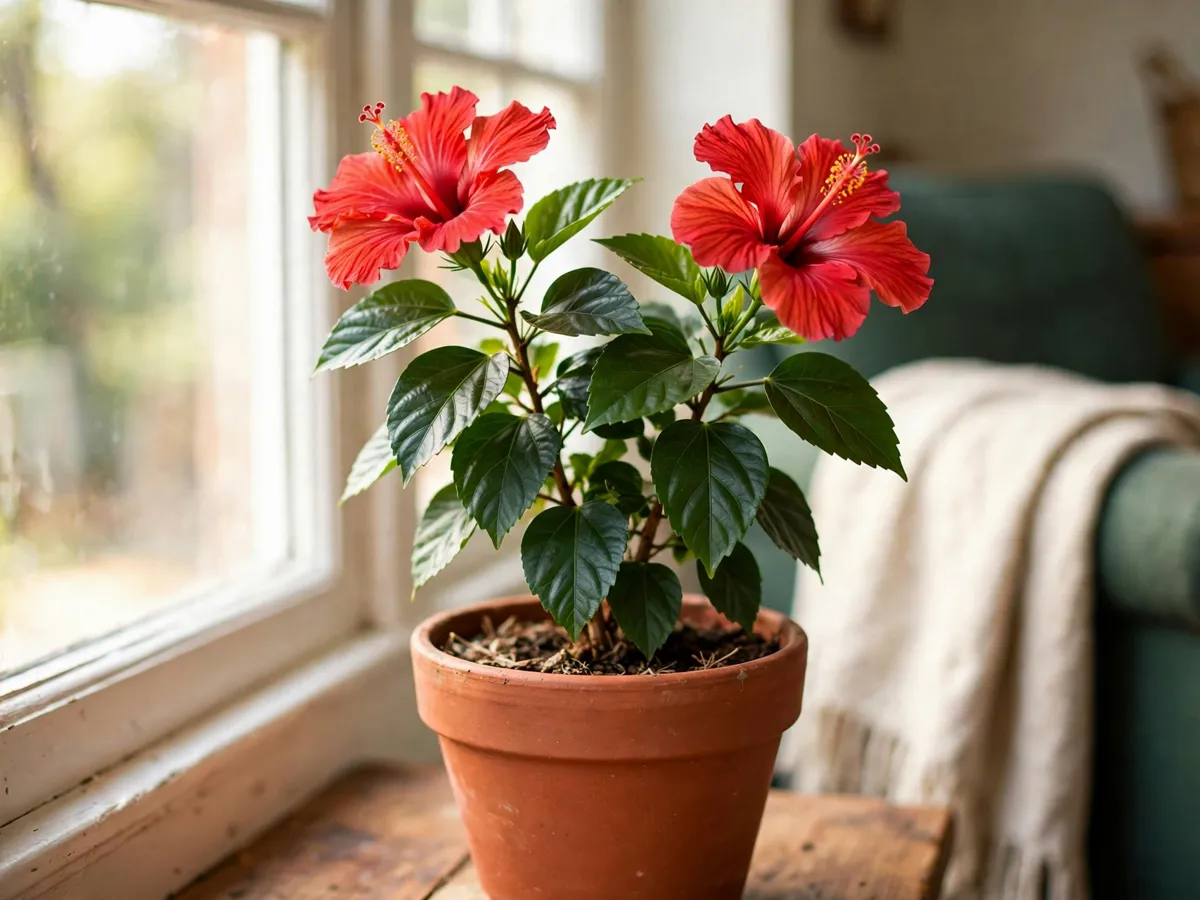
Hibiscus rosa-sinensis is an evergreen tropical shrub in the mallow family, sold as a pot plant from six inches to three feet tall. The flowers are the sale: wide trumpet blooms in red, orange, pink, coral or yellow, opening from tight pointed buds. Each bloom lasts roughly one day, then closes and drops, and that single fact explains most of the confusion around this plant.
Buy the plant labeled by species. Hardy garden cousins such as Hibiscus moscheutos are a different lane entirely: they die back to the ground each winter and belong in a border, not on a windowsill. This guide is about the potted tropical species only.
Cost: $12–$35 for a plant in a six-inch pot. Time: 10 minutes to read the tag and check the roots. Caveat: a plant sold without a species label may be a hardy cousin that will confuse you in February.
2. The one mechanism: the winter move, not the plant, is the crisis
A hibiscus that spent summer outdoors in full sun moves into a room that is dimmer, drier and colder than it has ever known. And a pot that sat in the rain now gets whatever you remember to give it.
The plant responds by aborting buds and yellowing lower leaves. Owners read that as death. It usually is not, and it is not even a disease: it is a plant shedding the growth it can no longer support at a lower light level. It is not fully dormant, because the room is warm, but it is not growing much either. Raise light and humidity back toward what it had, then wait three to four weeks before judging the result. The season around the move is covered in the winter houseplant care guide.
Cost: $0. Time: 15 minutes to move it and find the brightest window. Caveat: buds already in bud drop will not recover, so the measure of success is new growth in February, not the plant you moved in November.
3. Before it comes in: the inspect-and-rinse routine
Treat the move as a two-week quarantine with a shower attached. Inspect the plant outdoors first, while the light is good. Check the undersides of leaves, the joints where leaves meet stems, and the soft new growth at the tips. Aphids cluster in those joints as small green or black bodies; spider mites leave fine pale stipple on the leaves; whitefly lifts off in a white cloud when you touch a stem.
Rinse the whole plant in a shower or with a hose, top and underside, until the water runs clear. That single step removes most of what rode in from outside. Move it to a bright spot away from your other houseplants for two weeks, because an infestation spreads indoors in days.
Cost: $0–$10. Time: 30 minutes. Caveat: a rinse will not remove scale or a heavy mite colony, so keep an eye on the new growth through December.
4. Placement: the bright-window verdict, and the drop-off cliff
A south or west window is the answer, and the plant should be close to it. Light falls away with distance: leaves against the glass get close to full daylight, and the same plant three feet back gets a fraction of that.
Two details matter as much as the direction. Keep the pot off the glass on cold nights, because a single freeze against a pane damages leaves and can kill a stem. And keep it away from the radiator or a heating vent, which bakes the leaves and strips the humidity the plant needs. A grow light is a fair substitute for the window.
Cost: $0–$40 for a bulb and clamp lamp. Time: 10 minutes to place the pot and turn it weekly. Caveat: a window that is shaded by an awning or a neighboring building is not a south window, so judge by the light reaching the leaves and not by the compass direction.
5. Bud drop, ranked: the four causes in order of likelihood
Buds fall while still closed, and they fall in a distinctive way: a yellowing pointed bud sitting on the soil surface with a clean break at the stem.
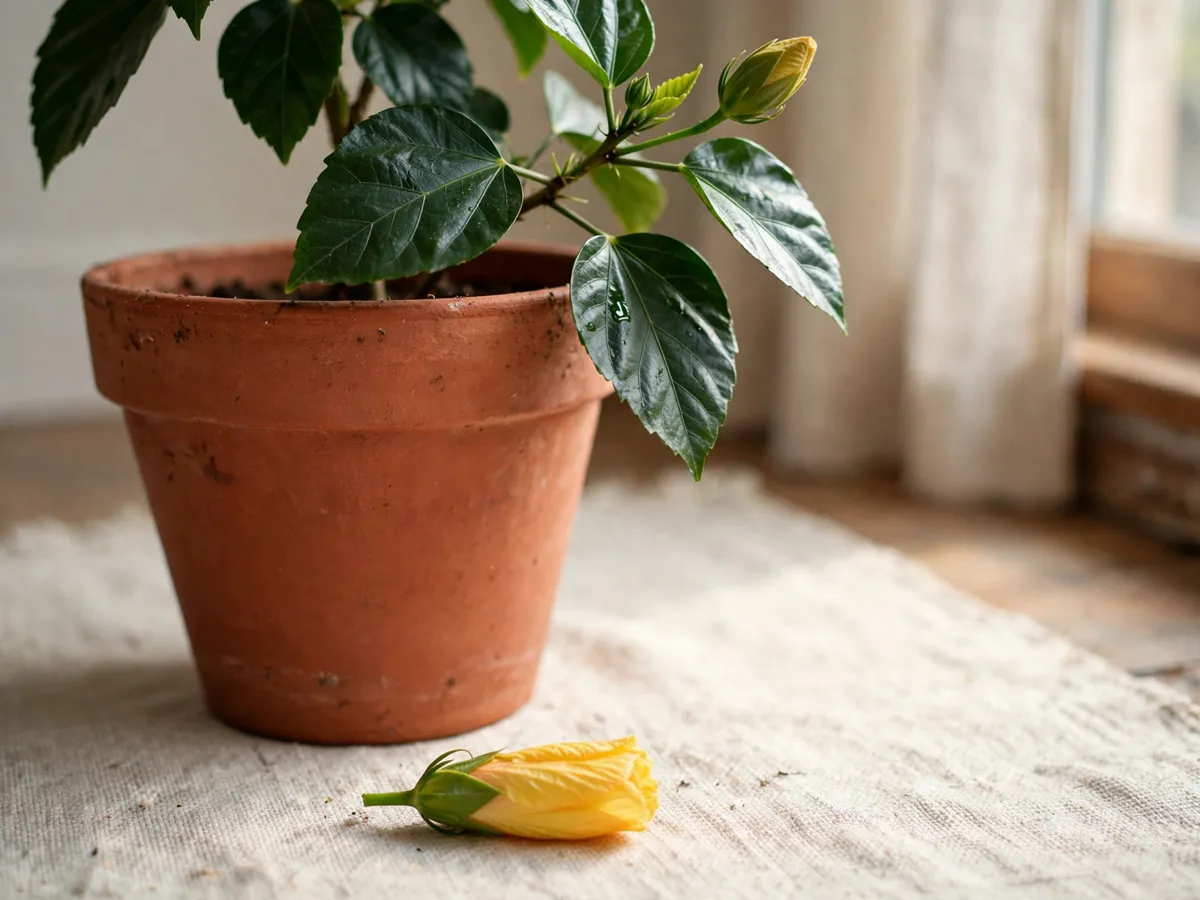
First, the light change. A plant that moved from a sunny patio to a dim interior has lost the energy it needs to carry a developing flower. A bud takes far more energy to finish than the leaves take to hold, so the plant keeps the leaves and drops the flowers. The tell is that buds drop in the first two weeks after the move, and the fix is the placement in section 4.
Second, a draft. A cold window pane, a door that opens onto a frosty entryway, or the air from a heat pump outlet chills the buds directly. The tell is buds dropping on the side of the plant facing the draft, and the fix is to pull the pot off the glass and out of the moving air.
Third, dry air. A hibiscus grows in high humidity outdoors and a furnace-dry room is a real shock to a plant in active growth. Buds shrivel and drop slowly over weeks rather than in a sudden flush, often alongside browning bud scales. Grouping plants lifts the immediate air enough to matter.
Fourth, moving it again. Each new position means a new light direction, and the plant turns its buds toward whatever light it had. Rotate a quarter turn every couple of weeks for even shape, and otherwise leave it alone.
Cost: $0. Time: 10 minutes to place it, draft-check the spot and stop turning the pot. Caveat: a plant in bud when it moves will often drop every one of them, and that loss is bought at the price of keeping the plant.
6. The yellow-leaf triage: overwater, underwater, cold, old growth
Yellow leaves have four different owners, and the diagnosis is reading rather than guessing. Lift the pot first. A heavy pot with damp mix and yellowing leaves means too much water, and the roots are the thing to check: tip the plant out and look for brown, soft or sour-smelling roots.
A light pot with dry mix and yellow leaves means the opposite, and one thorough soaking followed by a consistent rhythm fixes it within a fortnight. Cold is the third cause and shows as yellowing that edges toward purple-black on the leaves closest to the glass, along with a sudden drop after a hard frost night. The fourth is normal aging: a mature hibiscus sheds its oldest, lowest leaves as it grows, which looks alarming and is not.
The rest of the season is covered in the winter houseplant care guide.
Cost: $0–$15. Time: 20 minutes to lift, unpot and look at the roots. Caveat: a yellow leaf never turns green again, so judge the plant by the new growth at the tips rather than by the damaged foliage behind it.
7. Watering: the winter rhythm versus the summer rhythm
Outdoor in summer, a large hibiscus in full sun drinks heavily and may need water daily during a heatwave. Indoors in November, the same plant may need water every ten to fourteen days. Winter light, cooler temperatures and the way the plant slows down all reduce demand, and the commonest cause of a winter death is a summer watering habit applied to a winter plant.
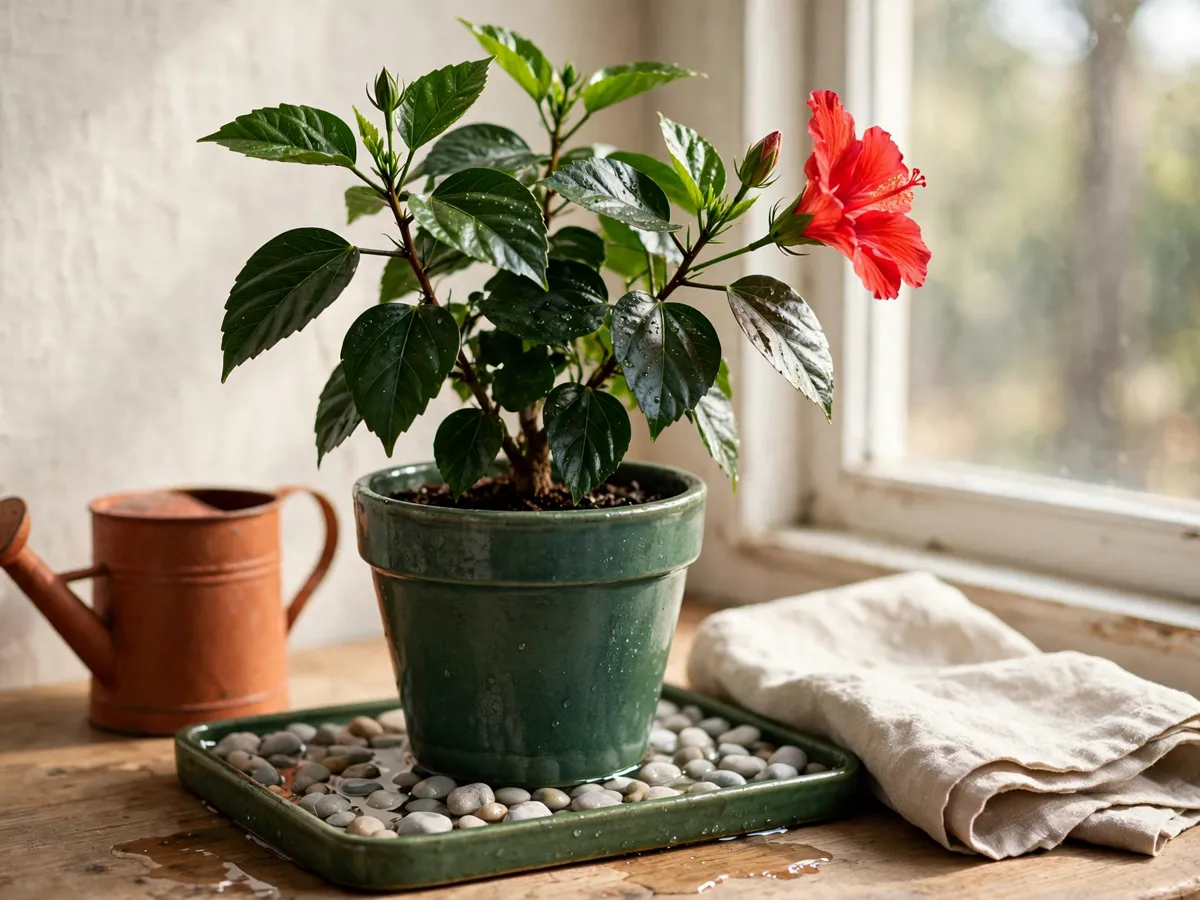
Buy a saucer for the pot and water deeply until liquid runs into it, then tip the saucer out twenty minutes later. Check the surface daily with a finger pushed an inch into the mix, and let that be the trigger rather than a day on the calendar. If the mix is wet in December, do not water.
Cost: $3–$8 for a saucer. Time: 5 minutes a week. Caveat: a large hibiscus in a plastic pot holds water in the middle of the root ball, so a dry surface is not enough evidence on its own.
8. Humidity and dry heating air: the honest room choices
A hibiscus wants more moisture in the air than most homes offer, and November to March is the hard part of the year because heating pulls moisture out of the room. Some approaches work and some mostly do not, and being clear about which is which saves effort. Grouping several plants together raises the humidity in the space immediately around them, and it is free. A pebble tray, which is a tray of wet stones under the pot, helps slightly and only very close to the pot.
Buy a small humidifier only when a hygrometer reads below about 40 percent in the rooms that matter. A bathroom with a large window is the best free humidity the average home can offer, and a kitchen with a bright window runs a close second. The room-change fixes cost nothing and do the most, while machines and trays are the add-ons. How often to run a unit is covered in the indoor fern plants guide.
Cost: $0–$40, free rooms or a small unit. Time: 10 minutes to choose a room. Caveat: a bathroom that never gets direct sun raises humidity without light, and it costs the plant more than it gives.
9. Feeding: the stop-and-start calendar
Feed a hibiscus more lightly and less often indoors than its size would suggest. Stop feeding entirely from late autumn, around the time the plant comes in, and hold it until it starts growing again in spring. A plant in a large pot that was potted up recently carries enough reserve in its mix to make it to March with no feed at all.
Resume in spring when new growth appears, which is usually February or March indoors, and go up gradually: a balanced liquid feed at half the strength on the label, every two or three weeks through the growing season. Feed only a freshly watered plant, because feeding onto a dry root ball burns the fine roots.
Cost: $6–$14 for a bottle. Time: 5 minutes a month in the growing season, none in winter. Caveat: feed never fixes a light problem, and a well-fed plant in a dim corner just makes bigger leaves it then has to drop.
10. Pruning: the late-winter cutback that sets spring shape
Prune in late winter, not in November. Hibiscus flowers on new growth, so an autumn cut removes branches that were carrying buds too small to see yet. Wait until late January or February, when the light through the window is stronger and new shoots are starting at the tips. Then take about a third off the longest stems, cut just above a leaf node, and cut the bare lower section harder than the top so the plant rebuilds a rounder shape.
Cost: $8–$20 for a pair of shears. Time: 20 minutes. Caveat: pruning in November removes buds that were already set, so the cutback waits until late winter even when the plant looks like it needs tidying.
11. Pests: the insiders that ride in
The insects that arrive with the plant matter most in the first month indoors. Aphids sit in the joints where leaves meet stems and leave a sticky film. Spider mites hide on leaf undersides and show as fine pale stippling, with fine webbing in the leaf axils once the colony has settled, and a radiator in the room makes it worse. Whitefly lifts off in a white cloud when you brush a stem. Fungus gnats circle the soil when the mix stays wet.
The order of action does not change: isolate the pot away from other plants, rinse the foliage top and underside, dry it, then treat with insecticidal soap and repeat every five to seven days for three rounds, because eggs survive the first pass. The full identification chart is in the indoor plant pests guide. Fungus gnats are the exception to the spray rule, because they live in the mix: let the surface dry between waterings.
Cost: $6–$15 for insecticidal soap. Time: 15 minutes per treatment round. Caveat: a plant sitting in dry heated air is easier for mites, so raising the humidity around the pot is part of the treatment rather than a separate job.
12. The spring return: harden-off steps, week by week
The trip back outside is slower than the trip in, because sun does more damage to a plant than cold does, and a hibiscus that spent winter in a dim room has thin, soft leaves. Start once the nights stay above about 50 degrees, which in most of the United States means late April or May and later further north. Put the pot in bright shade for two hours a day and bring it back in at night.
Step up from there: a full day in shade in week two, morning sun in week three, and the final sunny spot in week four. A plant moved straight from a dark living room into June sun bleaches its leaves in an afternoon. A semi-dormant plant wakes slowly.
Cost: $0. Time: 5 minutes a day for a month. Caveat: one night under 50 degrees sends the plant back inside and restarts the clock, so check the forecast rather than the calendar.
13. Blooms: why buds form and what a flower costs the plant
Buds form on new growth, at the ends of branches where fresh shoots have hardened slightly. A hibiscus that spent summer on a patio made its buds in summer and can hold them through a stable autumn. Indoors, where light is weaker and new growth is slow, buds form later and more thinly, and a plant that loses light mid-cycle drops the buds it already made.
Each flower lasts a single day. It opens in the morning and closes by evening before dropping, so a healthy plant in full bloom can cover itself with flowers for weeks and still never show more than a handful at once. Gardenias drop buds for the same reason and answer to the same fixes, and the gardenia care guide covers that pairing in detail.
When a plant has not budded by late spring, the answer is almost always light rather than food. Feeding a plant that grows long, pale shoots makes more of the same, while moving it closer to the glass or adding a grow light is what starts buds.
Cost: $0. Time: 5 minutes a week checking the tips for new buds. Caveat: a plant that made thirty buds last summer may make none in its first winter indoors, and that is light and season rather than anything you did wrong.
14. Problems decoder: what each symptom is telling you
Buds that fall while closed point to light, drafts, dry air, or a move. Yellow leaves with wet mix point to too much water, and yellow leaves with dry mix and a light pot point to too little. Brown crisp edges in a heated room point to dry air rather than thirst, which is the opposite of the usual instinct. A plant that stretches toward the window and never buds is not hungry, it is dim.
Long thin stems with wide gaps between leaves are the same story. If that room is the only one you have, the swaps are the low light houseplants that need less water, which handle the same conditions without dropping every bud they make. Buds that blacken at the tip, or a stem that feels soft at the soil, point to cold damage near the glass.
Cost: $0–$20. Time: 15 minutes to read the plant and the mix. Caveat: two problems usually arrive together after a move, so check the light and the weight of the pot before changing anything else.
Common questions
Why are my hibiscus buds dropping before they open?
Start with light. A plant that came in from a patio loses the energy it needs to finish a bud, and it drops the buds rather than the leaves. A cold draft from a window or a door is second, dry heated air is third, and moving the pot again is fourth. Fix the placement before touching the watering.
Can a hibiscus live through the winter indoors?
Yes, and most of them do. Treat the plant as semi-dormant for winter: keep it in the brightest window, water when the pot feels light rather than on a schedule, feed nothing until new growth appears in spring, and expect fewer flowers than it had outdoors. A plant that holds its leaves and puts out new tips by February is overwintering well, and it stays semi-dormant until the light returns.
Why are the leaves on my hibiscus turning yellow?
Lift the pot. A heavy pot with damp mix points to too much water, so unpot the plant and look for brown, soft roots. A light pot with dry mix points the other way, and one thorough soaking fixes it. Yellowing on the leaves nearest a cold pane points to cold, and a single old yellow leaf near the base is normal aging.
Does a hibiscus need a humidifier in winter?
Not usually, not first. Group the plant with a few others to raise the humidity right around it, keep it clear of a radiator, and choose a bathroom or kitchen with a window when you can. Buy a small unit only if a hygrometer reads below about 40 percent.
When should I prune a hibiscus, and how much do I cut back?
In late winter, usually late January or February, once the light is strengthening and new shoots are starting. Take about a third off the longest stems, cut just above a leaf node, and shorten bare lower branches harder than the top. Skip the autumn months entirely, because that is when the plant is holding buds you cannot see.
Save these on Pinterest
Pin the winter move checklist, the ranked bud-drop causes, and the yellow-leaf triage, the three decisions that decide whether a hibiscus reaches spring. This guide and the rest of the gardening tips live together there.