 Plant As Deco
Gardening & Planting Tips
Indoor Pineapple Plant: Sun, Water, Pups
By Plant As Deco · Updated 25 November 2026
An indoor pineapple plant is a slow, architectural bromeliad that drinks partly through a cup formed by its own overlapping leaves, wants the brightest window you own, and eventually hands you a small fruit and a new generation of plants.
Weekend-ready: $8–$35 for the plant or crown, pot, mix and a saucer, one afternoon. A few minutes of cup checks each week after that.
1. What a pineapple plant actually is: a bromeliad in a pot
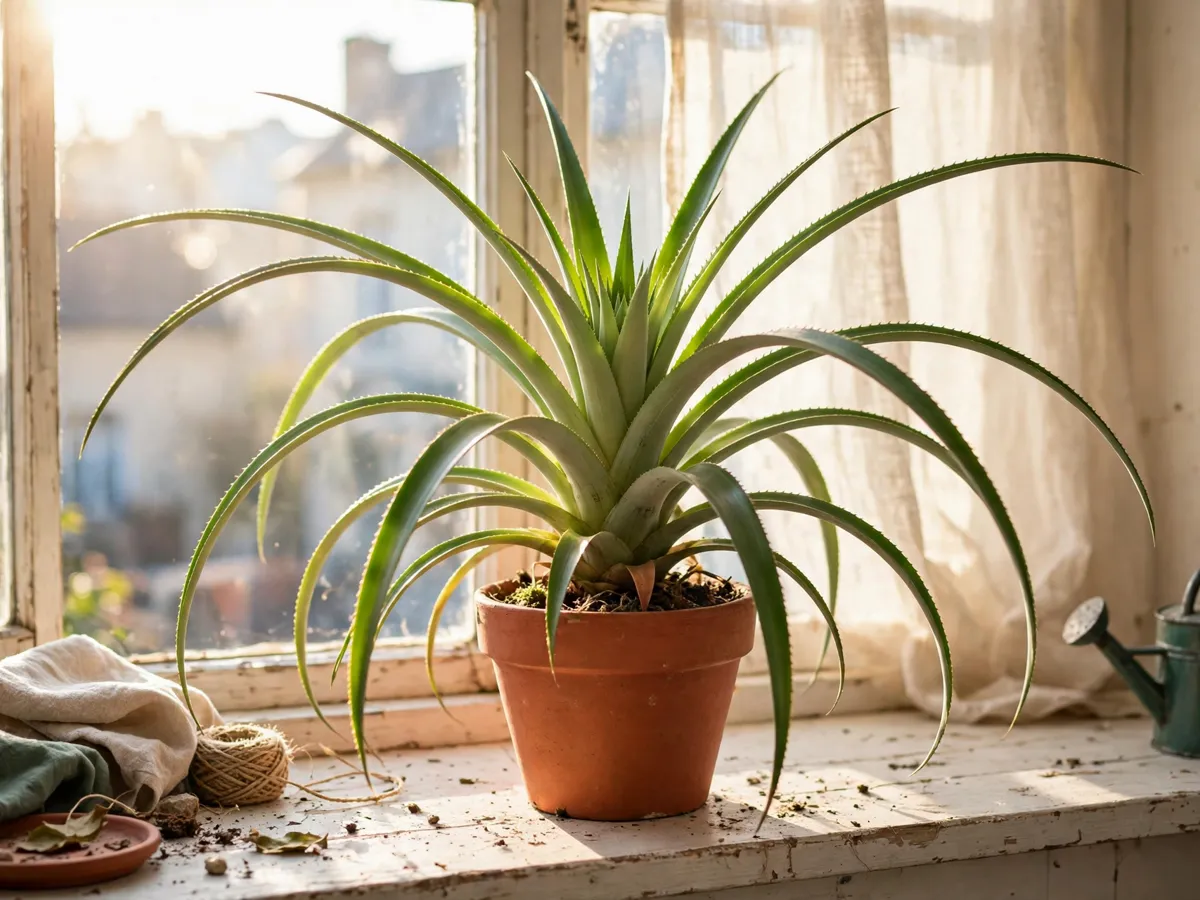
Pineapple is Ananas comosus, one species in the bromeliad family, and the family detail explains most of its care. Bromeliads are built for thin wet pockets rather than deep damp soil: many grow as rosettes whose overlapping leaf bases seal into a funnel, and the pineapple carries the same architecture. Its thirty or so stiff, sword-shaped leaves arise directly from a stubby stem in a tight rosette, the overlapping leaf bases cup water where they meet, and a fruiting stalk later rises from that same center. In a pot the plant stays compact, rarely passing three or four feet across and about as tall, and the spiky leaves arch outward in every direction, so plan a two-to-three-foot clear radius around the pot from day one.
Cost: $0–$12. Time: 15 minutes to read the plant and pick its window. Caveat: a corner that fits the pot today will not fit the two-foot leaf spread of a two-year-old plant.
2. The one mechanism: it drinks from a cup, not just the soil
Most houseplants take nearly all their water up through the roots, so every care rule routes through the soil. A pineapple is a bromeliad, and the rosette shape changes that. Where the leaves overlap at their bases, the sealed leaf bases form a natural tank, the leaf cup, and the plant absorbs water directly through the specialized tissue there while the roots take the rest from the mix. The roots still matter, but the cup is the faster and more reliable channel, and a plant whose cup sits empty is running short even when the soil is still moist.
Cost: $0. Time: 2 minutes a week to look into the cup. Caveat: the cup is small on a young crown, so in the first year the soil still carries most of the watering job.
3. Light: the brightest-window verdict
A pineapple wants more sun than almost anything else on a windowsill, because in the ground it is a full-sun crop. The verdict is simple: give it the brightest window in the house, ideally an unshaded south-facing one, where it can take several hours of direct sun a day without a curtain between leaf and glass.
Shift a new plant toward the brightest spot over two to three weeks and it will take the sun without marking. In winter, when the sun is low and the days are short, growth nearly stops even in the best window; the fix is a full-spectrum grow light on a 12-to-14-hour timer, and the details are in the grow lights for indoor plants guide.
Cost: $0–$40 for an LED panel if no window is bright enough. Time: 10 minutes to test the window and a quarter turn of the pot weekly. Caveat: bleached patches on old leaves never recover their color, so judge the plant on its newest growth.
4. Starting from a crown: the twist, the peel, the water jar
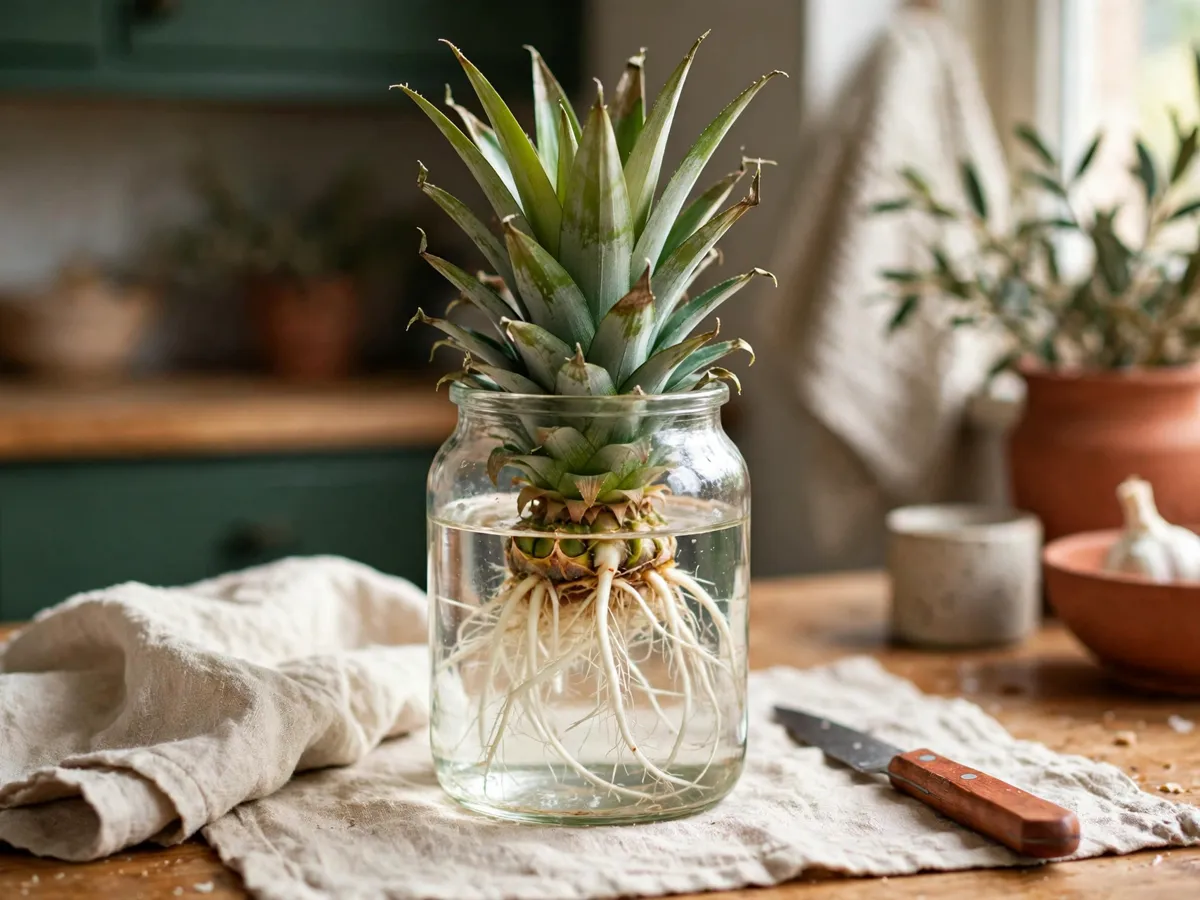
The cheapest start is the fruit you already bought. Hold the fruit body with one hand and grip the crown where the leaves bunch with the other, then twist firmly; a good crown separates with a clean stem wound. Strip the lowest leaves off the base to expose an inch or so of bare stem, which is where the new roots will break, and let the wound sit open in the air for a day or two to callus over.
Stand the crown in a jar of room-temperature water so only the bare stem is under water and every remaining leaf stays dry, set it somewhere warm with bright light but no hard direct sun, and change the water whenever it clouds. Roots usually show within one to three weeks, and the crown is ready to pot up once they are two to three inches long. Some crowns simply refuse: a crown that has sat six weeks in clean warm water with no roots is a dud, and the right move is to start another, not to keep nursing. The fruit-scrap project with the same patience profile, avocado, gets its own walkthrough in the growing avocado from seed guide.
Cost: $0–$5 for the fruit. Time: 30 minutes to twist, strip and set up the jar. Caveat: grocery crowns are a coin flip on rooting, so twist two crowns instead of betting the project on one.
5. Pot and soil: the drainage rule and the pot size verdict
Pineapple roots are modest for a plant that eventually makes a fruit. The verdict on size: a 6-to-8-inch pot carries a rooted crown through its first year, and a mature rosette that you want to fruit well lives in a 10-to-12-inch pot, roughly two to three gallons. Any container with a drainage hole works, but terracotta suits this plant in particular, because the walls breathe, the mix dries evenly, and the weight keeps a top-heavy rosette of stiff leaves from tipping. The mix should drain fast: a standard indoor mix loosened with a handful of perlite per pot keeps the root zone aerated, and the full recipe reasoning is in the best potting soil for indoor plants guide.
The drainage rule matters more here than the feeding rule precisely because the roots are modest: a pot two sizes larger than the roots need holds more wet mix than the plant can drink, and that wet margin is where root rot starts. When the rosette visibly outgrows the pot, move up one size, and only one.
Cost: $8–$25 for pot, saucer and mix. Time: 30 minutes to pot up a rooted crown. Caveat: no drainage hole, no plant; a decorative outer pot is fine, but lift the inner pot out to drain fully rather than letting it stand in the runoff.
6. Watering: the leaf-cup rule and the dry-out rhythm
Watering runs on two channels, and the cup comes first. Once a rosette is big enough that its overlapping leaf bases hold water, keep about a half inch of room-temperature water standing in the center of the rosette, topping it up weekly. Every couple of weeks, flush the cup: pour warm water in until it overflows into the soil and runs from the drainage hole, then empty the saucer. On a young crown with no real cup yet, skip this and just water the soil; the cup job starts when the rosette starts holding water on its own.
The soil channel runs on a dry-out rhythm rather than a calendar: water thoroughly when the top two inches of mix have dried, soak the whole surface until water runs from the drainage hole, then let the pot drain and dry again before the next one. Never pour cold water into the cup, and never let the pot stand in a full saucer after the flush. The fundamentals behind the soil half of this, pot weight, drainage, saucer discipline, are the same as for any houseplant and are written out in the care of houseplants routine guide.
Cost: $0–$12. Time: 5 minutes a week in summer, less in winter. Caveat: a rosette that tips over when you water the cup means the pot is too light for the plant, so move up one pot size at the next repot.
7. Feeding: the light-touch schedule
A potted pineapple is not a hungry plant. A balanced liquid houseplant feed at half the label strength, applied monthly from spring through late summer, is enough for steady growth. The bromeliad twist is that you can pour the feed into the cup as well as the soil, because the plant absorbs through both channels. Dilute further for the cup, a quarter of the label rate, and keep the flushing habit from section 6, because dissolved salts pool in a cup that never gets emptied and burn the absorbing tissue. Feed moist soil only, skip feed entirely for two months after potting up, and stop feeding from late autumn through winter when light is weak. The label-reading and flush habits are covered in the indoor plant food guide.
Cost: $6–$12 for a bottle of balanced liquid feed. Time: 5 minutes a month in the growing season. Caveat: feed never fixes a light problem, and an overfed pineapple in a dim room grows soft and open rather than tight and spiky.
8. Temperature and placement: the warm-room rule
The plant is a tropical crop, and the verdict is a room that holds 65 to 85 degrees through the year, with the low 70s the comfortable center. Below about 60 degrees the roots slow and growth stalls, and a night near freezing injures the leaves in one event, so a windowsill whose pane turns cold in winter needs either a curtain between pot and glass or the pot moved a few inches back.
Ordinary room humidity is workable for this plant, which is one of the friendlier things about it. A pebble tray under the pot and a grouping of plants add a small pocket of damper air, worth having but not decisive.
Cost: $0–$15 for a pebble tray. Time: 5 minutes to choose the room. Caveat: a pot moved away from cold glass for winter still needs the brightest available spot, so solve the two together rather than trading one for the other.
9. The fruit reality: two to three years, one fruit, small and slow
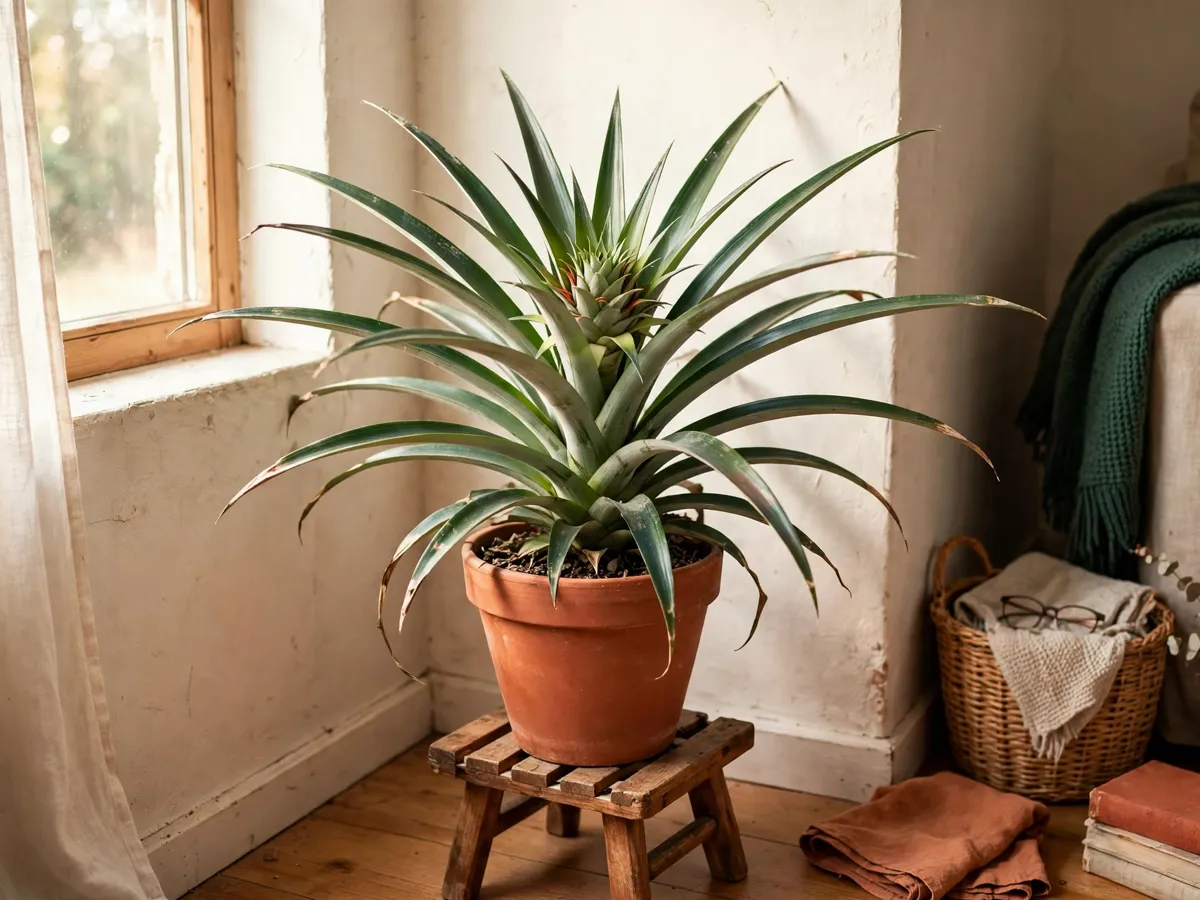
Here is the honest range, stated as fact rather than as encouragement: an indoor crown that roots well, lives in the brightest window, and is fed lightly but consistently takes two to three years to produce one fruit. The fruit is small, often one to two pounds, nearly always edible, and considerably smaller than a field-grown fruit because a pot restricts the root run a field plant uses. It forms at the center of the rosette on a stalk that rises from the cup. Ripeness is a color and a smell: the skin breaks from green toward gold at the base and the fruit develops a strong sweet aroma at the stem end.
People try to shorten the wait by forcing the plant: a clear bag over the rosette with a ripe apple for a week or two, the old ethylene trick. It occasionally works on a plant that is already mature, because the gas can trigger flowering, but a young plant ignores it, and an over-large plant forced early makes a smaller fruit than it would have made on its own schedule. The plant, not the trick, decides.
Cost: $0–$8 for ripening tricks nobody needs. Time: 0 minutes; the plant decides. Caveat: the two-to-three-year range assumes a rooted grocery crown in good light; a nursery plant sold at fruiting size is the exception that fruits in year one.
10. After the fruit: the center dies, the pups take over
A pineapple plant is monocarpic, which means each rosette flowers once and only once. After the fruit finishes, the parent crown declines from the center outward over the following months: the innermost leaves brown and dry first while the outer ring can stay green for a year or more.
While the center declines, the base does the opposite: offshoots, the pups, push up around the dying crown and carry the line forward. A healthy plant usually makes two to four, and they are the reason a pineapple is a line of plants rather than a single specimen. Leave the pups attached and let them form a clump in the original pot, which looks full but crowds the roots, or separate them into their own pots, which resets the cycle with plants that skip the crown stage entirely. Keep watering the outer ring and the pups through the decline; the roots under them are still alive and working.
Cost: $0. Time: 15 minutes a month of observation through the decline. Caveat: browning that starts at the leaf tips all around the plant, rather than at the center, is still a care problem and section 14 is the place to diagnose it.
11. Separating and potting pups: the one-pot-per-plant rule
Separate a pup when it is one-third to half the size of the parent rosette, which usually lands six to twelve months after the fruit. Slide the whole root ball out of the pot, brush the mix back until you can see where each pup joins the base, and twist or cut the pup away with a clean knife so it carries some roots of its own. Pot each pup into its own container, one plant per pot, in the same fast-draining mix from section 5, sized so the pup sits at the same depth it grew at.
The one-pot-per-plant rule is not fussiness. Pups left sharing a pot grow into a crowded rosette cluster that competes for the same modest root run, water unevenly, and never size up the way a singly potted plant does.
Cost: $0–$10 for extra pots and mix. Time: 45 minutes for a three-pup clump. Caveat: a pup that separates with no roots at all can still be rooted like a crown in a jar of water, it just takes longer to establish.
12. Growing vs buying: why the store fruit is not the same cultivar
The fruit on a grocery shelf and the fruit on your windowsill are both Ananas comosus, but they are not the same plant. Commercial fruit comes from selected cultivars bred for size, uniform ripening, shipping toughness and low spines, and the fields that grow them are managed for exactly one harvest cycle. A crown twisted off that fruit grows into a plant carrying the cultivar's fruit genes in a pot a fraction of the size of a field row, under window light rather than full tropical sun. The result is the small one-to-two-pound fruit described in section 9, and the flavor varies plant to plant because grocery crowns are not labeled by cultivar in the first place.
Buying vs growing is therefore a question of what you want from the project. If the goal is fruit to eat, a nursery plant already at fruiting size delivers sooner and more reliably than any crown, and costs $15 to $30. If the goal is the project itself, the crown route is nearly free, teaches the whole lifecycle from bare stem to pups, and ends with plants to keep or give away. For more plants that start as one simple project, the tropical houseplants for beginners guide covers the wider set.
Cost: $15–$30 for a fruiting-size nursery plant; a crown is $0–$5. Time: 20 minutes to compare options before buying. Caveat: nursery labels rarely name the cultivar either, so treat any flavor promise on the tag as marketing, not a specification.
13. Pets and handling: the spiky-leaf fact and placement
The pineapple plant is not listed as toxic to cats and dogs, and unlike many houseplants the leaf is not the hazard. The hazard is mechanical: the leaves carry small spines along their margins, and a rosette at shin height beside the brightest window in the house is exactly where a dog swings past or a cat launches from. The practical placement answer is a plant stand that lifts the rosette above the traffic line, or a pedestal pot near the south window, and the routines for keeping pets away from pots in general are in the keep cats out of indoor plants guide.
Cost: $5–$10 for gloves and a plant stand if you need one. Time: 10 minutes to reposition the pot out of the traffic line. Caveat: spines soften nothing with age; a two-year rosette is as armed as a seedling, so place for the adult size from the start.
14. Problems decoder: what each symptom is telling you
Brown, curled leaf tips across several leaves usually mean the leaf cup ran dry for weeks in warm air, so check the center first, then the watering rhythm from section 6. A collapsed, listless rosette with bone-dry soil means the plant went too long on both channels, and a thorough soak plus a cup top-up usually revives it within days. Yellow lower leaves on an otherwise stiff, green plant are the normal shedding of the oldest growth and need nothing but a tug to remove. A rosette that leans hard toward the window is phototropism, not disease; give the pot a quarter turn each week and it squares itself up.
Cost: $0–$12. Time: 15 minutes to read the plant and correct the one channel that failed. Caveat: two symptoms at once is common after a season change, so fix the light and the cup before changing anything about feeding.
Common questions
How long does a pineapple take to grow indoors?
Two to three years from a rooted grocery crown to one fruit, given the brightest window in the house and light monthly feeding through the growing season.
Do you water a pineapple plant through the leaves?
Partly, yes. It is a bromeliad, so once the rosette is large enough to hold water where the leaf bases overlap, keep about a half inch of room-temperature water standing in that center cup and top it up weekly.
Can I grow a pineapple from the top of a store-bought fruit?
Yes, and it is the standard way this plant gets started. Twist the crown off, strip the lowest leaves to expose an inch of stem, let the wound callus for a day or two, then stand it in a jar of room-temperature water. Roots usually show within one to three weeks, and the crown is ready for soil once they are two to three inches long.
Will an indoor pineapple plant fruit more than once?
No. Each rosette flowers once, sets one fruit on that stalk, and then dies back from the center while pups push up around its base. The line continues through those pups, not through the parent: separate them into their own pots and each one repeats the cycle.
Is a pineapple plant safe around cats and dogs?
The plant is not listed as toxic to cats or dogs, so the risk is the leaves rather than the chemistry: stiff margins lined with small spines at exactly the height a passing dog or a launching cat meets first. Any suspected illness after a pet chews any houseplant is a veterinary question, not a wait-and-see.
Save these on Pinterest
Pin the leaf-cup watering rule, the brightest-window verdict, and the problems decoder, the three sections that decide whether a pineapple crown makes it to fruit. This guide and the rest of the gardening tips live together there.