 Plant As Deco
Gardening & Planting Tips
Paperwhites and Hyacinths Indoors: A Windowsill Winter Bloom
By Plant As Deco · Updated 24 November 2026
Two bulbs cover most of the winter windowsill season, and they ask for very little: a bright pane, a bowl of water or a pot of soil, and the attention to detail that keeps a flower stem standing upright. The paperwhite sends up white, scented flowers from a bulb nested in pebbles and water, while the hyacinth grows one dense spike of blossoms from a bulb in a glass vase or in soil.
Weekend-ready: $10–$45 for two bulbs, a pot, pebbles and soil, one afternoon. Five minutes of checking each week while they bloom.
1. Why these two bulbs: the no-garden windowsill pair
A paperwhite and a hyacinth share one habit that explains nearly every question about them. Each bulb holds energy stored from last summer and spends it in a single long push toward flowers. The leaves that follow are a bonus rather than the point.
That single burst of growth is also why both flop. The stem stretches fast toward light, the flower spike grows heavy, and warm indoor air then finishes the job. A plant grown in a cool greenhouse stands up on its own. The same plant on a warm shelf above a radiator does not. A third winter bloomer shares this rhythm, and its page covers the soil pot and the stake method in detail: amaryllis care indoors.
Cost: $0–$4. Time: 10 minutes to compare the three options. Caveat: bulbs bought in late winter have little flowering energy left, so shop early.
2. The calendar: when to start each one for a December or January window
Work backward from the month you want flowers. Paperwhites need roughly four to six weeks from potting to bloom, so a pot started in mid-October opens in late November, and one started in early January opens in February. Hyacinths run a little longer once they are potted, usually six to eight weeks to color, because the bulb spends the first weeks sending up roots before it lifts a flower spike.
Cost: $0–$15. Time: 15 minutes to plan and mark the dates. Caveat: a January paperwhite may flower well but give fewer flower stems than an October one.
3. Paperwhites: the pebbles-and-water setup, the water-line rule
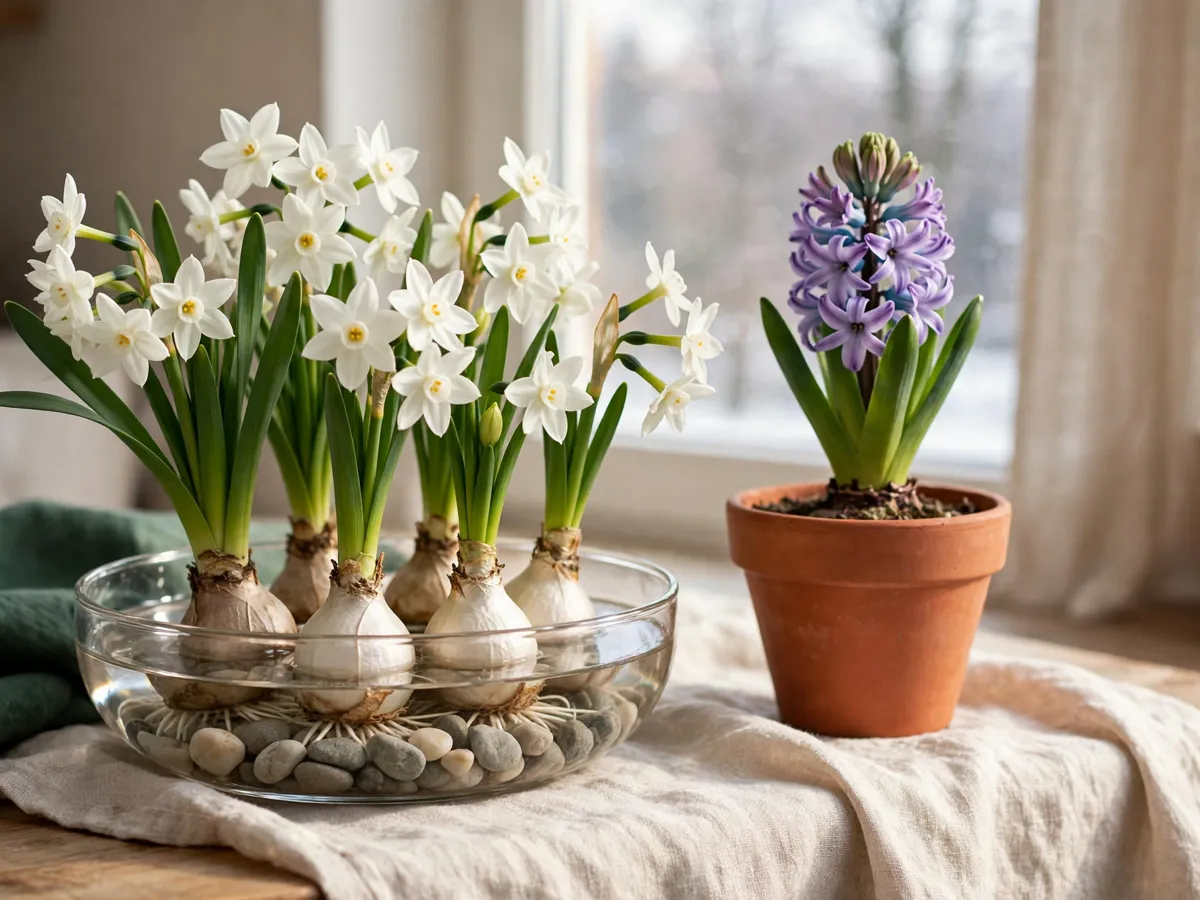
The bowl setup is simple enough to do with a dish from the kitchen. Choose a shallow glass bowl or saucer wide enough for the bulb to sit flat and stable, add two inches of clean pebbles, then nestle the paperwhite on top with its pointed end up. The roots want darkness and contact, so fill the bowl with water until it reaches just below the bulb base. That is the water-line rule: the roots drink, and the bulb itself stays above the surface.
A paperwhite sends roots down before it sends a flower stem up. Expect roots in two to three weeks in a warm room. Add water as the level falls, pouring slowly along the side so the roots are not disturbed, and change the water if it turns cloudy while keeping the level steady. Paperwhites often produce their flower stem first and their leaves afterward, which looks strange until you know the order.
A shallow bowl adds a little humidity right at the sill, which is harmless. Do not let it become a damp corner though: constant wetness around the base of the bulb invites rot rather than growth.
Cost: $3–$10 for the bowl and pebbles. Time: 15 minutes to set up, two minutes each week to top up. Caveat: if the bulb base sits under water, the base can rot and the stem will never open.
4. Hyacinths: the bulb vase versus the soil pot
A hyacinth has two good indoor homes. The glass vase route uses a narrow-necked vase filled with water so the bulb base touches the surface and the roots hang into the water below, which keeps the soil question out of it entirely and gives a clean look on a shelf. The soil route uses a small pot with a drainage hole and a light indoor mix, which gives a sturdier plant that can stay on the sill into the winter after flowering. The details of that mix sit in the best potting soil for indoor plants guide.
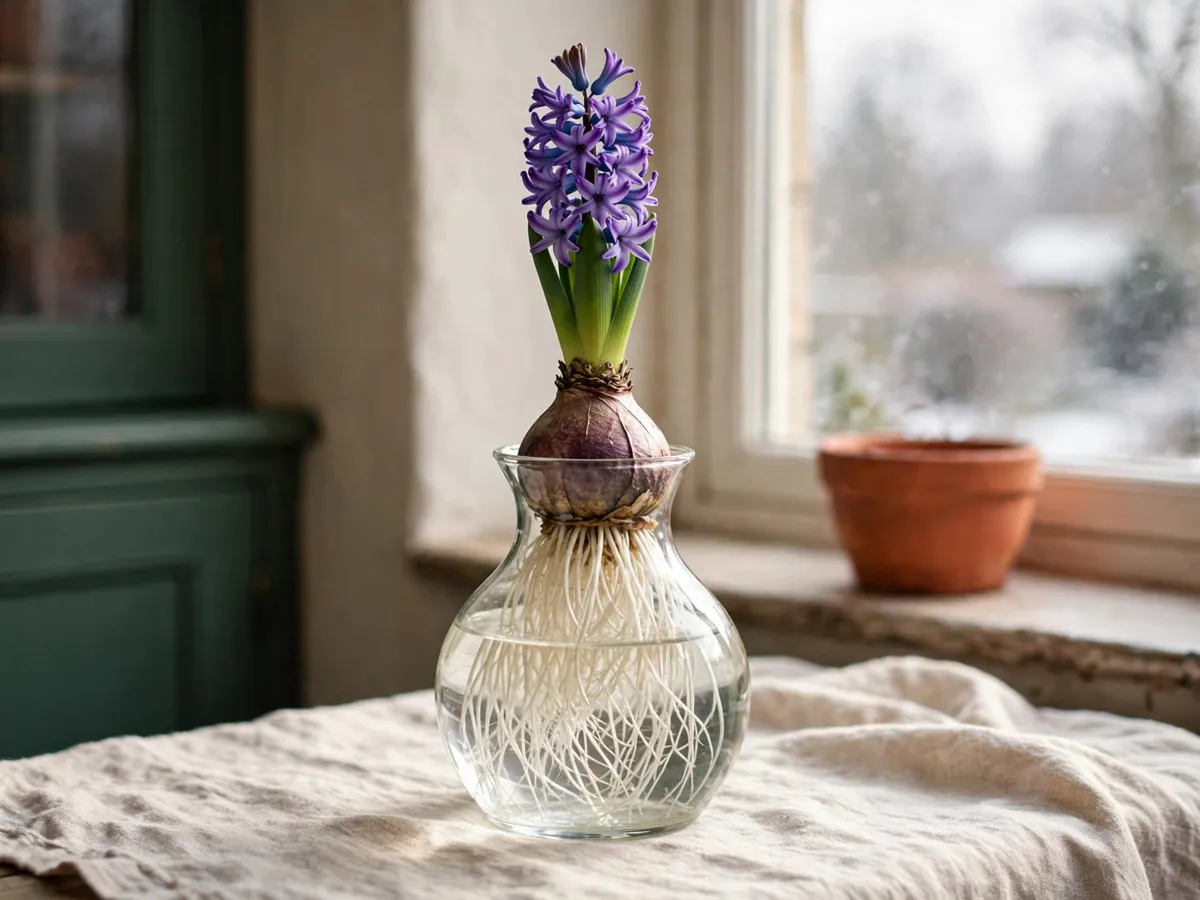
Whichever route you pick, the bulb sits high. In a vase, the neck holds it so only the base meets water. In a pot, leave a third of the bulb above the soil line, because burying it deeply invites rot. One hyacinth bulb gives one flower spike, while a paperwhite often sends up two or three stems, so buy three bulbs for one pot if you want a thick cluster of color.
Cost: $6–$18 for the vase or pot, soil and pebbles. Time: 20 minutes. Caveat: a vase with no narrow neck cannot hold the bulb high, and a bulb sitting in a puddle will not open its flowers.
5. The chill question: which bulbs need cold weeks and which do not
Here is the difference that matters between the two. Hyacinthus orientalis sets flower buds only after a long cold period, roughly twelve to sixteen weeks near or below fifty degrees. Paperwhite narcissus does not need that cold at all. In a warm winter room it is happy to start as soon as it is potted. This is why a chilled hyacinth in October can bloom for you, while an unchilled one in January often gives leaves and no flowers.
If you bought bulbs that have not been chilled, chill them yourself. Put each bulb in a paper bag or a labelled envelope and store it in the refrigerator away from fruit. Ripening apples, pears, and bananas release ethylene gas, which can damage stored bulbs and spoil the cold period they need. Keep the bulbs dry in the dark and check them once a week.
A cellar or unheated porch that stays reliably cold works as well as a refrigerator when the temperature is right, and the space has to stay near or below fifty degrees without freezing the bulbs. Some gardeners overwinter hyacinth bulbs in a cold frame outdoors for exactly that reason, and a bulb in dormancy needs cold and dark before it wakes. Once the chill is done, pot the bulbs and move them into the light.
Cost: $0–$8 for a bag and labels. Time: 10 minutes to set up, one minute a week to check. Caveat: bulbs stored in a warm pantry will not develop good buds no matter how long you wait.
6. Light after the buds show: the flop mechanism and the cool-room fix
The flop has a cause, and the cause has two parts. After the buds show, the plant spends its last stored energy on a fast stretch toward light. The stem reaches for the window, the flower spike grows heavy, and warm air then does the rest. A plant that grows in a cool greenhouse stands up on its own; the same plant on a warm shelf in winter does not.
The fix has three parts. Give it the brightest window you have, and turn the pot a quarter turn every few days so the stem grows evenly instead of leaning. Move the pot to a cooler room once the buds color, somewhere around sixty degrees during the day and cooler at night. And keep it away from a radiator or a heat vent, because warm air at the base of the stem is what finishes the flop.
Do not move it back and forth between warm and cool once it has committed. Each move resets the plant a little. Pick the final spot when the buds show and leave it there. Leaves that appear after the flowers are the plant's own schedule, and they can stay in place until they yellow on their own.
Cost: $0–$20 for a small fan if the room runs hot. Time: 10 minutes to move and turn. Caveat: a stem that has already laid over rarely stands back up, so prevention at bud stage is the only real cure.
7. Staking and supports: twine, stakes, and the shot-glass trick for paperwhites
Supports are cheap insurance and they take five minutes. For a hyacinth in soil, push a slender bamboo stake into the pot beside the stem and tie the stem to it with soft twine or plant tape, leaving a finger of space so the swelling stem is not pinched. Tie loosely at two points: once low near the leaves and once high near the flower spike, where the weight actually sits.
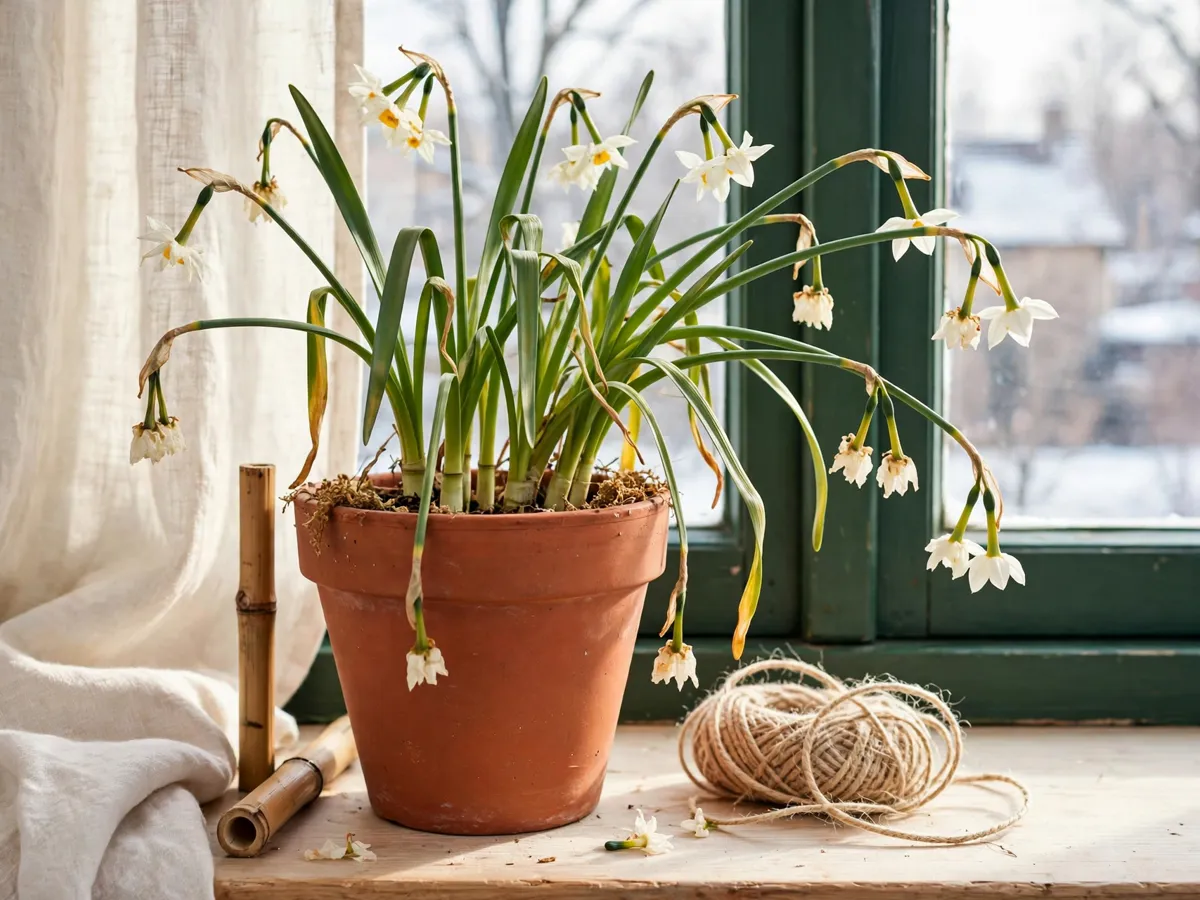
For paperwhites in a bowl, the support is the rim. A small wooden stick tucked between the pebbles and the side of the bowl gives the stem something to lean against without looking like a stake in a flower arrangement. The old household trick of setting a shot glass over the bulb in the bowl holds the stem upright and slows the water from evaporating, though it works best before the stem gets tall.
Cost: $2–$6 for stakes and twine. Time: 10 minutes per pot. Caveat: a tie that is too tight scars the stem as it thickens, and hard wire can mark the leaves.
8. Watering and top-ups: keeping the line at the bulb base
Watering is the one place where the two plants stop being alike. The glass and pebble setup is a top-up job: watch the water line, add water when it drops, and change it if it turns cloudy. The soil pot is an ordinary watering job with an indoor twist. Water when the top inch of mix is dry, pour slowly until a little runs from the drainage hole, and empty the saucer.
In winter the soil dries more slowly than most people expect, because the light is weak and the room is cool. A pot that drank twice a week in October may need water every two weeks in January. Test the mix instead of trusting a schedule. The broader rules for watering houseplants through the cold months are in the winter houseplant care guide.
One problem to know in the soil route: a pot that stays wet and warm invites fungus gnats, tiny flies around the soil surface. Let the surface dry between waterings, and if fungus gnats appear, let the top inch go dry for a few days. Yellowing lower leaves usually mean the mix stays wet too long rather than that the plant needs more water.
Cost: $0–$8 for a small watering can. Time: 5 minutes a week per pot. Caveat: leaving a vase below the bulb base filled with dirty water is the fastest way to lose a flower spike.
9. Scent and placement: the strong-fragrance fact and the room choice
The hyacinth fragrance is intense, and that is a plain fact about the flower. One spike in a small room is enough to notice from the doorway. Paperwhite scent is strong too, and several stems together fill a room quickly. If you love the smell, that is much of the point of growing them. If you do not, the placement advice is simple: keep them in a room you pass through rather than one you sit in for hours.
Kitchens and dining rooms suit them well. Bedrooms and small offices are where the scent becomes tiring, because the air volume is low and the room stays closed for hours in winter. A hallway, porch, or laundry room with a bright window keeps the plant happy and the scent where you pass through it.
The same placement logic applies to light. Bright, indirect light and a cooler corner of a room is the combination that keeps a hyacinth upright. For a longer holiday display that keeps going past the hyacinth season, the christmas cactus care guide covers the plant that flowers from November into the new year.
Cost: $0–$6 for a small tray to move the pot on. Time: 5 minutes to move the pot. Caveat: scent strength varies with the cultivar, so a pale double hyacinth can smell much stronger than a single one.
10. After bloom: the honest verdict on keeping bulbs for next year
The honest verdict differs sharply between the two. A hyacinth bulb has spent everything it had on one spike. After the flowers fade, the leaves stay for a while, the bulb shrivels, and the plant is finished. Keep the pot in a bright spot until the leaves yellow naturally, then compost or discard the bulb and the soil. A spent hyacinth pushed back into the ground rarely flowers again.
Check the leaves occasionally for spider mites, since a crowded indoor pot can host them in a warm room. If you want a plant that stays attractive well past February, the cyclamen care guide covers the other winter houseplant, which flowers repeatedly through the cold months instead of spending everything at once.
Cost: $0–$6 for a small pot of soil for offsets. Time: 20 minutes to separate and pot offsets, once a year. Caveat: offsets need a full growing season before they are big enough to flower, so plan a year ahead.
11. Pets and bulbs: the toxicity fact and where to place them
Both plants are listed as toxic to cats and dogs, and the bulbs are the most concentrated part. Chewing a bulb or a leaf can cause vomiting and lethargy. This is a plain placement fact rather than a reason to skip the plants, and no garden guide can predict how a particular animal reacts, so a suspected exposure is a call to your veterinarian.
Cost: $0–$12 for a plant stand. Time: 10 minutes to choose the spot. Caveat: this is care guidance rather than veterinary advice, so confirm any exposure with your vet.
12. Buying and storing unplanted bulbs: firmness, timing, the refrigerator caveat
Buy firm bulbs. A good bulb is heavy for its size, hard, and free of soft spots, mold, or a loose papery skin that rubs off. Paperwhites come in packs of several, hyacinths singly or in three-packs by color. A paperwhite at a dollar or two is a good deal; a bulb that feels hollow has spent its energy elsewhere.
Cost: $2–$12 for a small batch. Time: 10 minutes to sort and store. Caveat: a bulb kept in a warm kitchen for three weeks before potting may give leaves but no flowers.
13. Troubleshooting: no roots, no bloom, the too-warm room
No roots after three weeks means the setup is wrong rather than the bulb. Water above the bulb base, or a cold room below fifty degrees, will stall root growth. Paperwhites need warmth to root: a kitchen counter at sixty-five degrees beats a porch. Set the bowl in warmer air and keep the water line just below the base.
No flowers on a hyacinth usually means the bulb never got its cold period, or it was too warm once the leaves were up. No flowers on a paperwhite usually means too much heat and too little light during the bud stage. In both cases the answer is the same: more light, cooler nights, and patience with the leaves that come after the flowers.
Cost: $0–$12 for a replacement bulb and a fresh pot. Time: 30 minutes to reset one pot. Caveat: a bulb that has gone soft at the base cannot be saved, so the diagnosis has to come early.
14. Cost reality: $10–$45 for both plants set up
That lands most people between ten and forty-five dollars for both plants set up properly, and less if you already own a bowl. Add nothing else. The plants ask for a window and a little attention, not equipment, and a cheap bulb in a bright room in winter beats an expensive bulb in a dim one. The best value is the repeat performance: paperwhite offsets give free flowers the following year.
Cost: $10–$45 for both plants set up. Time: 45 minutes of shopping and one afternoon of potting. Caveat: spending more on a decorative vase does not change what the bulb needs.
Common questions
Are hyacinths indoor or outdoor plants?
Both. Hyacinths are hardy spring bulbs that grow outdoors in a garden bed and bloom indoors from a pot or a vase through the winter months. The same bulb handles both jobs; the indoor version simply gets the container you planned for the windowsill instead of the ground.
How long do paperwhites and hyacinths take to bloom?
Paperwhites open in four to six weeks after potting. Hyacinths take about six to eight weeks once potted, provided the bulb has already had its twelve to sixteen weeks of cold. Without that cold period, a hyacinth grows leaves and may never flower, which is the most common reason for a disappointing pot.
Why are my hyacinth stems flopping over?
Warm air and weak light after the buds show. Move the pot to a cooler room around sixty degrees, give it the brightest window you have, and turn the pot a quarter turn every few days. Staking helps a stem that is already leaning, but a stem that lays over rarely stands back up on its own.
Are paperwhites and hyacinths safe for cats and dogs?
No. Both are listed as toxic to cats and dogs, and the bulbs are the most concentrated part. Chewing a bulb or a leaf can cause vomiting and lethargy. Keep both plants and any discarded bulbs on a high shelf or out of reach, and confirm any suspected exposure with your veterinarian.
Can I grow the same bulbs again next year?
For paperwhites, often yes. The bulb produces small offsets that can be separated after the leaves die back and potted the following autumn for another show of flowers. For hyacinths, usually no: the bulb has spent its energy on one flower spike and is finished once the leaves yellow.
Save these on Pinterest
Pin the water-line rule and the flop fix, the two details that decide whether these flowers stand up straight. This guide and the rest of the gardening tips live together there.