 Plant As Deco
Home Organization & Storage
Toy Storage for Small Apartments: 6 Bins, 24 Inches of Wall
By Plant As Deco · Updated 18 November 2026
One child's toys do not need a room. They need about 24 inches of wall, six open bins, and a count that decides before the toys do. In an apartment the floor is shared property: it belongs to the bed, the kitchen chair, and the adult crossing it bare foot at 6 a.m. This guide stores one child's toys in one room — the count rule, the bins at a height a small kid can reach, the rotation box, and the five-minute reset.
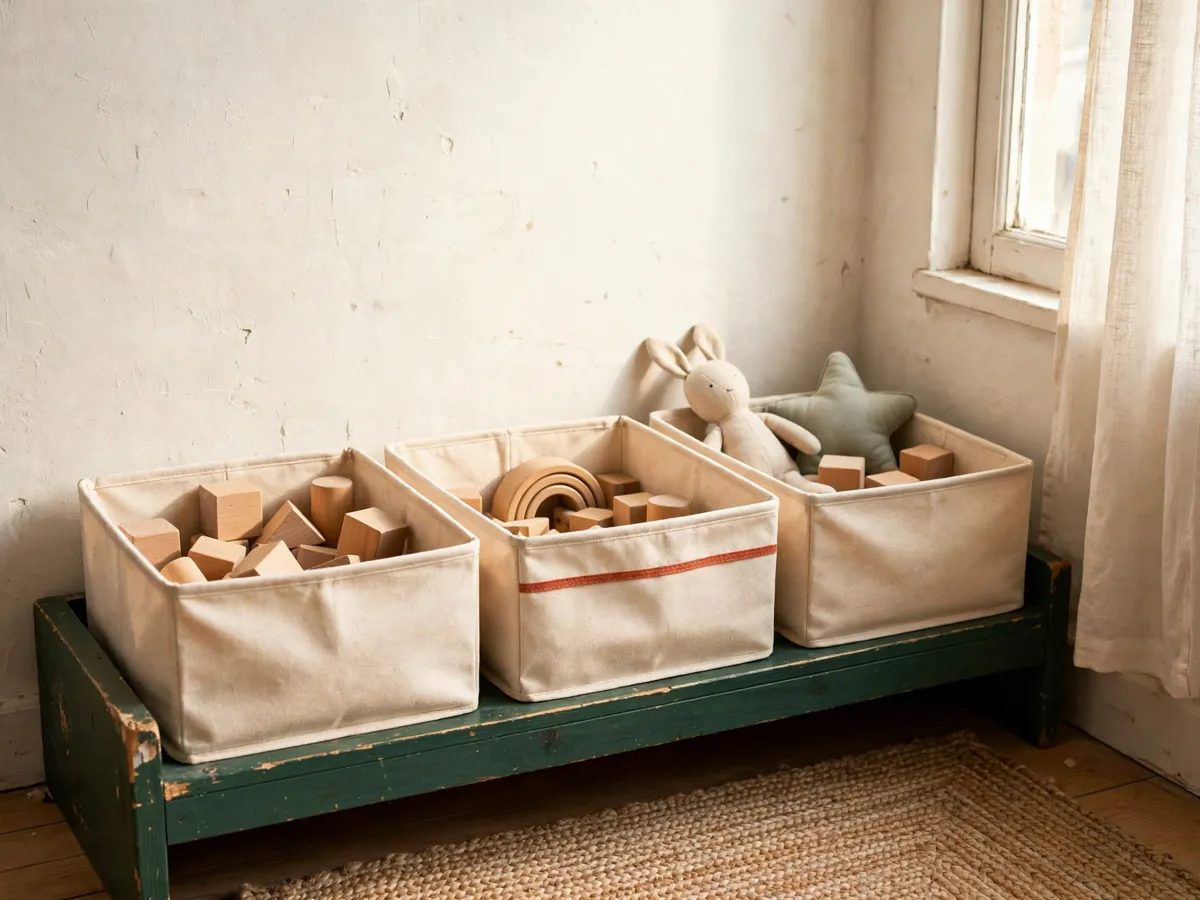
The 24 inch toy station, in one corner
The number the whole page hangs on is 24 inches. One toy station is about 24 inches of wall: a low open shelf, or two cube units side by side, plus three toy bins on the front row. In a studio that is a corner, not a room — the strip between the bed frame and the door, the wall behind the kitchen chair, the top shelf of the coat closet. Once the toys have a measured footprint, the question becomes what fits in 24 inches.
Everything downstream follows that footprint. The count decides how much toy earns the space. The sort decides which bin each piece lives in. The height decides whether cleanup is the kid's job or a nightly rescue by you. Buy the bins first and you end up with three sizes of basket and a floor that still loses the argument. And most advice on this topic reads like a judgement about parenting, when the apartment is the constraint, not the child — the square footage stays the same whether the toy count is forty or four hundred.
Weekend-ready: $45–$130, one afternoon. Scope: one station, about 24 inches of wall, six to eight bins, one rotation box, one clip file for art. Time: 3–4 hours, plus the habit, which is the part that actually holds.
The count rule: two bins per category, one box by the door
Storage fails when the containers outrun the inventory rule. Eleven bins with no count attached hold exactly that much toy, so set the count first: two open bins per category, no more.
A category means a type of play, not a type of object: vehicles, blocks, figures and animals, dress-up, puzzles. Most families run three categories daily and one or two on weekends. Two bins each, the daily set at kid height — six to eight toy bins, and they fit a 24 inch station.
The second half keeps the count stable. One retire-box lives by the door — a shallow bin, a cardboard box, a folded crate from the last delivery. When a new toy comes in, one goes in, and the box leaves when full. Birthdays are not negotiable, so the outflow gets a fixed address. You donate the contents at the next collection run and the shelf stays at two bins.
What leaves is a separate decision; the count only says how many bins. That workflow has its own guide, named in the hand-off list below. Run it once, before the bins arrive.
Cost: $0. Time: 20 minutes to write the categories down. Caveat: a category that needs three bins is really two categories, and a shelf that needs ten bins is a count problem no shelf will solve.
Sort by type and play frequency, not by which kid owns it
The instinct is to sort by child: this bin is the sister's, this one the brother's. That fails inside a week, because kids do not play by ownership — a figure travels from one bin to the other and the label becomes fiction. Sort by type instead.
Three tiers, named the same way every time: daily, weekly, seasonal. Daily means the categories the kid reaches for unprompted — vehicles, blocks, the small figures in every household. Weekly means the puzzles, the dress-up basket, the craft materials that need an adult nearby. Seasonal means the balcony water toys. Type decides which bin. Frequency decides which shelf.
Lay the whole collection on a bed first. You are looking for the categories, roughly four to six, and the tier each belongs to. Two bins per category gives you the bin list — write it before you shop, then rotate the tiers by season instead of rebuilding the shelf.
A toy that spans two categories goes in the bin it is played with in. The wooden train that also works as block-building lives with the blocks. The only test is whether the kid finds the piece again on their own. If a category thins out, donate the extras rather than shrinking the bin.
Cost: $0. Time: 45 minutes for the full sort, inside the afternoon. Caveat: a category with no bin left after two rounds of the retire-box merged with a neighbour, and the shelf got one bin freer.
Bins at kid height: the 12 to 30 inch band
Height decides ownership. A bin a four-year-old can reach is a bin they can fill, and a bin they can fill is one you do not have to empty alone. The working band is 12 to 30 inches off the floor, roughly a small kid's comfortable reach while standing. Anything above the shoulder line is adult-stocked, so it is not part of the nightly cleanup.
Measure before you buy. Set the low shelf against the 24 inch stretch of wall, clear of the hall closet door, then run a tape up from the floor. The lowest bin sits around 12 inches, high enough to clear a toe; the highest daily bin stops at 30. Above that line live the rotation box and the fragile things.
Now the container. Buy open-top, rectangular bins with no lid. A round basket with a lid is a two-step job — lift the lid, then hunt through a curved well — and a four-year-old does one step. Rectangular bins nest: two of them use the full 24 inches, while a round one wastes the corners.
Plastic wins the daily row and loses on looks: six to eight plastic bins run $30–$60 and wipe clean, a wicker basket reads better and holds dust. Put plastic on the daily shelves and one woven basket on the adult shelf, where the eye lands from the sofa.
The label is the last third of the system, and it goes on the bin, not the shelf. Shelves get moved to another wall; a label fixed to a shelf dies with the shelf. Put a picture AND a word on the bin front, facing out. The picture is for the reader who cannot read yet. The word is the one you say out loud — blocks, not construction materials. Tape beats a label gun, because tape comes off a rental bin without a scar.
One safety line, stated once: any freestanding shelf holding bins must anchor to the wall. Bins pulled at speed shift the centre of gravity forward, and a tip hazard is a furniture problem rather than a toy one. The wall-anchor build is the lesson on the pegboard mounting page, which covers studs and screw length in one place. Anchor the shelf once and forget it.
Cost: $30–$60 for bins, $8–$20 for a printed label set or tape and card. Time: 40 minutes to place, label and load the daily row. Caveat: a shelf 36 inches tall puts the top bin out of reach and turns a two-person cleanup into yours.
The rotation box: keep about a third out for six to eight weeks
Rotation earns its keep in month three, when every daily bin has been refilled so often the toys inside have stopped registering. The rule: keep about a third of the collection out of sight for six to eight weeks, then swap it back. A closed box on a high shelf holds the resting third.
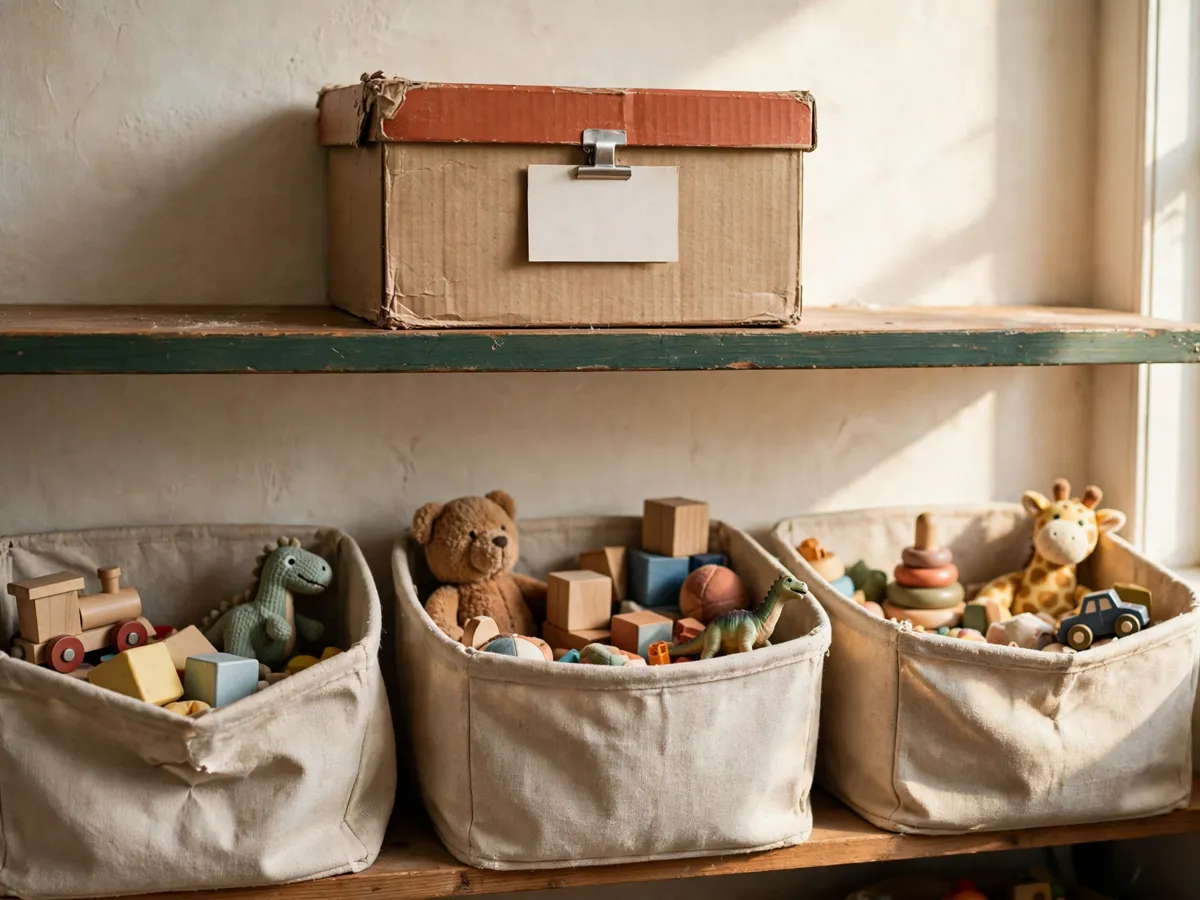
Nobody hides toys to teach a lesson here. A block set that returns after two months arrives like a new purchase, and the shelf stays the same size. Rotation also halves the volume problem, because 24 inches of wall now holds two thirds of the toy instead of all of it.
Run it on a calendar rather than on impulse. Pick two swap dates, six or eight weeks apart, and treat each swap as a fifteen-minute job. Pull the box down, empty the resting third into the bins, send the outgoing third back in. Because the label lives on the bin, the swap never touches the shelf.
Where the box lives depends on the room. A high shelf above the 30 inch line is the default. If the apartment has a spare closet, the shelf above the closet rod is the best place to rotate a toy bin set from. A flat bin under the bed is the second choice, and the under-bed system itself is the studio apartment guide's job, named in the hand-off list below.
What goes in the box: the toys loved but not reached for, the second of any duplicate, the half-complete set. Anything the kid asks for by name stays out. If a piece sits past two seasons it stops being rotation and becomes a donate pile, so rotate on the date.
Cost: $0 if a box already lives here, $10–$20 for one lidded bin that stacks. Time: 15 minutes per swap. Caveat: a resting third that sits beyond eight weeks stops being rotation, so write the swap date on the box the day you fill it.
Vertical and door space: hooks, cubes, one crate
A 24 inch station runs out of shelf fast; the wall above it and the door beside it absorb the overflow. A row of three or four adhesive hooks at 30 inches holds anything with a loop or strap: the backpack, the swim bag, the dress-up skirt. Each hook is rated on its own, and the rating drops on textured wallpaper, so test one hook with a light load for a week before you hang the rest. Hooks take soft loads. Bins take hard ones.
Above the hooks, one shelf for the display tier — the two or three things the kid wants seen. Cube units are the other option: two 12 inch cubes side by side match the 24 inch footprint of a low shelf, each cube holding one bin facing out. Fill the bottom two with daily bins, the top two with the rotation box, and anchor the pair before they get heavy.
An open cubby without a bin in it is a sorting game every time the shelf is bumped, so give each cubby a container or leave it empty. One sized for a soft basket suits the dress-up tier.
The door gets one job: the retire-box. A shallow crate, a folding box, or a canvas bin on a hook behind the door absorbs the inflow from a party before it reaches the shelf. A wooden crate built from one board is the nicest version, and the one-board crate plan covers the build. Buy or build, the crate lives by the door and leaves when it is full.
Shoe storage is a separate zone: the cubby under a bench and the shoe line belong to the entryway bench plans, the coat-and-shoe drop zone to the renter entryway guide, both named below. Keep the daily toy bins out of the entryway cubby — the front door is the busiest square foot in the apartment, and a bin there gets kicked.
Cost: $6–$20 for hooks, $60–$110 for a low shelf or two cube units, $0–$35 for a crate depending on whether you build it. Time: 60–90 minutes to hang and place. Caveat: an over-loaded wall shelf above a child's head is the one buy to skip.
The art stack and the fragile things
Two categories break the bin rule. The first is artwork: the cardboard museum that accumulates at roughly one sheet a day. Paper does not fit a bin — it curls and becomes a stack nobody can clear. The fix is one 12 inch clip file or a single binder, upright against the wall, reviewed once a term: keep the best ten sheets, recycle the rest with the kid's permission.
The fridge magnet wall is a display, not storage, and it is why the wall above the kitchen chair disappears: ten sheets displayed, the other sixty curling unseen behind the appliance. If you want art on show, rotate two pieces on a hook and let the file hold the rest.
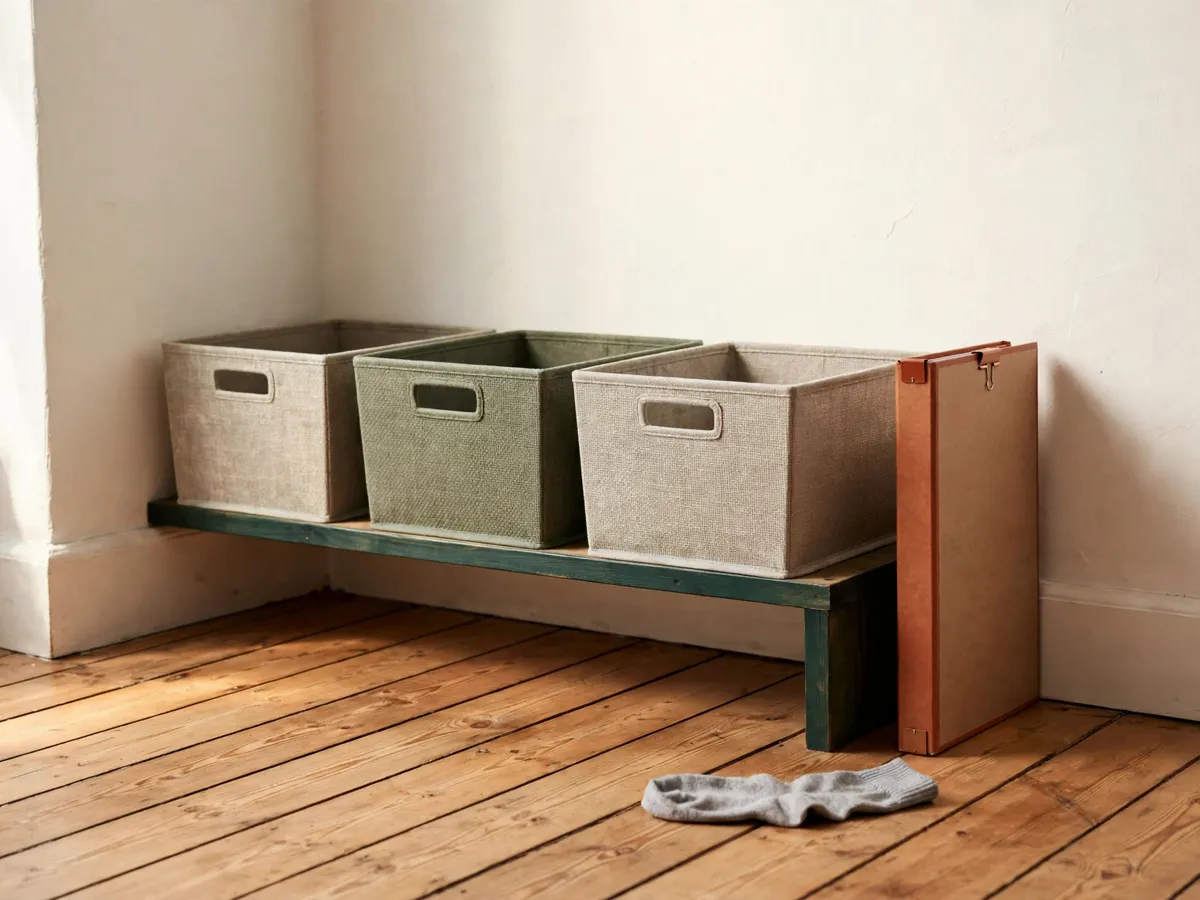
The second exception is the fragile tier: the figure with thin limbs, the one good doll, the gift that cost real money. A daily bin gets dumped at speed, so give these a shallow drawer or a lidded bin on an adult shelf, above the 30 inch line.
Books and the one display toy have their own guide. Picture books spine-out at kid height, and the beloved animal on the top shelf, are a display choice, and the bookshelf ideas guide covers that layout. This page owns the bins.
Cost: $8–$20 for a clip file or binder plus a printed label sheet. Time: 20 minutes to start the file, five minutes per term to review it. Caveat: a clip file that fills up becomes the paper stack again, so buy the 12 inch size.
The five-minute reset that ends the night
Everything above is set-up. This is the habit, and it decides whether the apartment still has a floor in December. The reset is one timer and one rule: everything in a bin, nothing on the floor, and the bins go back on the SAME shelf. Not a tidy shelf — the same order, the same label facing out. That clause is what makes the reset fast, because there is no decision left at 8 p.m.
Run it as a five-minute job, not a deep clean. The bar is low: a bin filled badly still counts, a toy shoved in sideways still counts, and the only failure is a piece left on the floor.
Expect the adult to run it for the first six weeks. A four-year-old can put toys in a bin from day one, but cannot notice what is out of place and return the bins without a prompt. That prompt is the habit under construction.
The reset also protects the count. The retire-box by the door fills, the box leaves to donate its contents, the bins stay at two per category.
Cost: $0. Time: five minutes a night, adult-run for about six weeks. Caveat: a reset that moves the bins to a different shelf each night teaches nobody where anything lives, so the same-shelf clause is the one rule you do not negotiate.
What it costs: $45 to $130, one afternoon
The whole station is three buys. Six to eight plastic open-top bins run $30–$60, a low open shelf or two cube units $60–$110, the clip file and the labels $8–$20. Added up, the honest range is $45–$130.
Where the money does not go is worth naming. This is shelf-and-bins work, well short of carpentry — nothing here needs a weekend and a garage. If a quote for a custom closet system shows up for the toys, the number is wrong.
Buy in priority order if the afternoon only covers part of it. First the bins, because the count rule cannot run without them and a bin works on the floor meanwhile. Second the labels, which change who can use the shelf. Third the low shelf, which takes the toy off the floor for good.
Two cost traps. The matching-basket set: twelve round lidded baskets that will not nest on a 24 inch shelf. The toy furniture piece that folds into a seat, a chest and a desk at once — more than a shelf and a bin combined, and it sags under a full block bin.
Cost: $45–$130 total, most families landing near $80. Time: 3–4 hours including the shop. Caveat: a twelve-pack of bins will beat the six-bin list on price while losing it on height, so buy to the list.
What we skip
Six adjacent jobs have their own pages; the hand-off keeps this one to one shelf and one afternoon.
- The space under the bed. The flat-bin system, the clearance height and the wheels are the studio apartment storage guide. This page only says the rotation box may go there.
- The keep-or-let-go decision. The room-by-room checklist owns the piles, the donation run and the whole-apartment pass that happens before the bins arrive.
- The crate build. The cut list for a wooden retire-box lives in the one-board crate plan. Buy one or build one; this page does not teach the joinery.
- Shoes and the seat. The cubby under a bench and the shoe line belong to the entryway bench plans. Toys only take the hooks and the box beside the door.
- Books and the display toy. Spine-out picture books at kid height are laid out in the bookshelf ideas guide. This page keeps them out of a toy basket.
- The coat-and-shoe zone. The drop tray and the rental-safe entryway are covered in the entryway ideas for renters. The toy station borrows the wall logic, not the whole zone.
The afternoon plan: 3 to 4 hours, $45 to $130
Run it in this order — measuring before buying is what keeps the bin list at six instead of twelve.
- 0:00–0:20 — Measure the 24 inch stretch of wall. Mark the floor and write the 12–30 inch reach band on paper before you open a store page.
- 0:20–1:05 — Dump every toy onto a bed. Sort into four to six categories, tag each daily, weekly or seasonal, and send the seasonal tier to the top shelf of the hall closet. Two bins per category, written as a shopping list.
- 1:05–1:25 — Bag what the count rule rejects and start the retire-box by the door, to donate this week. The box stays there permanently.
- 1:25–2:10 — Shop or pull the bins. Six to eight open-top rectangular bins, one low shelf or two cube units, a 12 inch clip file, labels or tape and card.
- 2:10–2:40 — Place the shelf against the wall, anchor it, and set the daily bins inside the band — lowest bin at about 12 inches, highest daily bin at 30.
- 2:40–3:05 — Label every bin: one picture, one word, on the bin front, the same word you say out loud. Never on the shelf.
- 3:05–3:25 — Load the daily and weekly bins, fill the rotation box with about a third of the collection, write the swap date on the box and rotate on that date.
- 3:25–3:40 — Start the art clip file with this term's sheets, and put the fragile things in a lidded bin above the 30 inch line.
- Night one — Run the five-minute reset yourself. Timer on, everything in a bin, bins back on the same shelf. Repeat for about six weeks.
- Every six to eight weeks — Rotate the boxes. Swap the resting third into the bins, fifteen minutes, same labels.
Cost: $45–$130. Time: 3–4 hours plus the nightly five minutes. Caveat: if the afternoon runs long, stop after step five — an anchored shelf with unlabeled bins beats a perfectly labeled floor.
Toy storage questions, answered
How many bins does one child need in a small apartment?
Six to eight, at two open bins per category. Work out the categories first — vehicles, blocks, figures, dress-up and puzzles — and the bin count falls out of the list. A shelf that needs twelve bins has a count problem rather than a storage problem.
What height should toy bins be at?
Between 12 and 30 inches off the floor for everything the kid uses daily. That band is a four-year-old's comfortable reach while standing. Anything above the shoulder line is adult-stocked: the rotation box, the seasonal bin, the fragile things.
Are lidded bins or open baskets better for toys?
Open-top and rectangular, for the daily row. A lid turns cleanup into a two-step job and a four-year-old does one step, so the lid lands on the floor. A round basket wastes the corners of a 24 inch shelf and tips when a small kid drags it. Save lids for the rotation box and the fragile tier.
Does rotating the toy bin contents actually work, or is it extra work?
It works, and it costs about fifteen minutes twice a season. Keep roughly a third of the toys out of sight for six to eight weeks and the visible third feels new again — that is what keeps two bins per category achievable. Rotate on a written date and donate what has rested two seasons.
What do I do with the artwork and the paper stack?
One 12 inch clip file or a single binder, standing upright and reviewed once a term. Keep the best ten sheets, recycle the rest with the kid's permission, and resist the fridge magnet wall: it displays ten sheets while the other sixty curl unseen behind the appliance.
Save these on Pinterest
Pin the count rule and the hook row first — two bins per category is the one line that keeps a station from creeping back to a floor problem by December. The rest of the Organization & Storage collection holds the closet reset, the entryway drop zone and the under-bed system this page hands off to.